Bytecamp'26: Navi Mumbai's Biggest Hackathon
What it really takes to organize a national-level hackathon: months of chaos, controlled execution, and the end of a chapter.
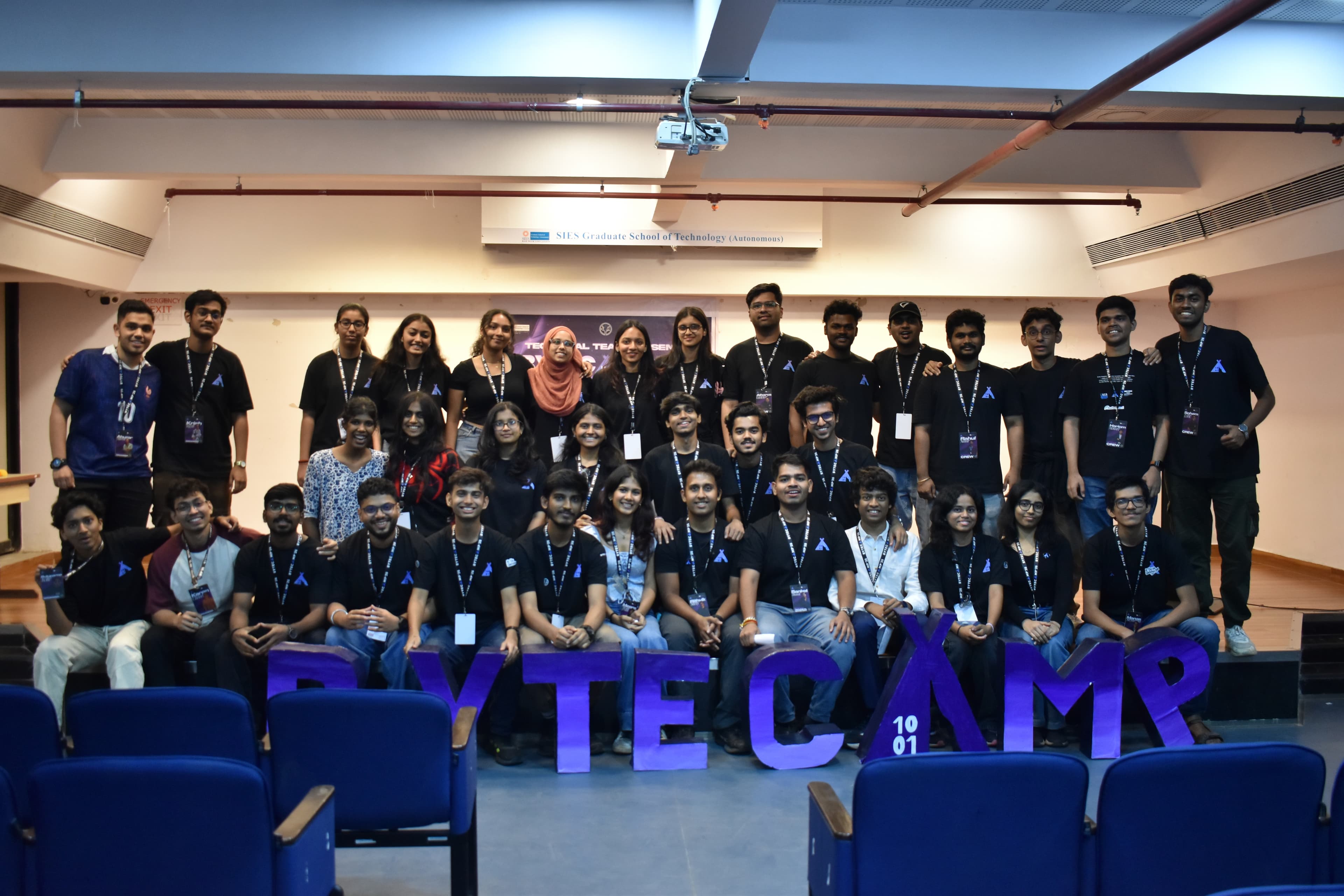
ByteCamp'26 wasn't just another college event. It was the closing chapter of my tenure as Secretary of the Technical Team at SIES Graduate School of Technology — and easily the biggest responsibility I carried during that time.
More Than Just Numbers
On paper, ByteCamp'26 was a national-level hackathon with over 2,400 registrations, filtered down to 400+ teams, and finally 40 shortlisted teams. Those numbers sound impressive — and they are — but they only tell a small part of the story.
What they don't show is the 5–6 months leading up to it: constant sponsor outreach, permission approvals, vendor coordination, and an endless stream of participant queries that never really stopped. The event didn't begin on hackathon day. It began months earlier, in uncertainty, follow-ups, and decisions that had to be made without knowing how things would turn out.
The Shortlisting Crucible
One of the most intense phases was shortlisting teams. We went through hundreds of applications in just 2–3 days with barely any sleep, knowing that every decision mattered — because we were choosing who gets a shot at building, and who doesn't.
That weight is hard to describe. You're not just reviewing submissions; you're making calls that affect real people's plans. It sharpens your judgment fast, but it's also exhausting in a way that caffeine can't really fix.
"No amount of planning eliminates chaos — it only prepares you to handle it better."
Controlled Chaos on the Day
From the outside, everything may have looked smooth. Internally, it was anything but. WiFi issues, teams traveling from Pune, Ratnagiri, Tirupati, and Kolkata all arriving at different times, food delays, and a constant stream of problems that needed to be handled before they became visible to anyone else.
That's what execution really looks like at this scale. It's not about things going perfectly — it's about making sure nothing fails visibly. The job is to absorb the chaos so participants never have to feel it.
What Made It Different
Managing participants from different cities, backgrounds, and expectations changes how you think about an event. You can't plan for everything. You adapt in real time, make decisions when you're running on empty, and keep moving because stopping isn't an option.
- Scale of outreach: 2,400+ registrations from across the country, handled by a small student team.
- Logistics complexity: Coordinating teams from multiple states, each with different travel constraints and arrival windows.
- Real-time problem solving: From infrastructure hiccups to scheduling shifts — handled on the fly, every time.
- Emotional weight: Shortlisting 40 teams from 400+ — a decision that affected real people, made under real time pressure.
Despite everything, ByteCamp'26 came together and ended smoothly — almost unexpectedly so. In fact, it felt like it ended too soon. After months of it being the center of everything, it was suddenly over.
The End of a Chapter
ByteCamp'26 was the final and biggest flagship event of our technical team for the term. For me personally, it marked the end of a chapter — one that taught me more about leadership, responsibility, and execution than any classroom could.
Leadership isn't about control. It's about taking responsibility, especially when things go wrong. The most seamless events are almost always built on moments that were anything but smooth behind the scenes.
If you're reading this as someone planning their first big event — know that the chaos is part of it. Plan well, stay calm, and trust the people around you. The rest has a way of working itself out.

Rithvik
Software Engineer & Designer